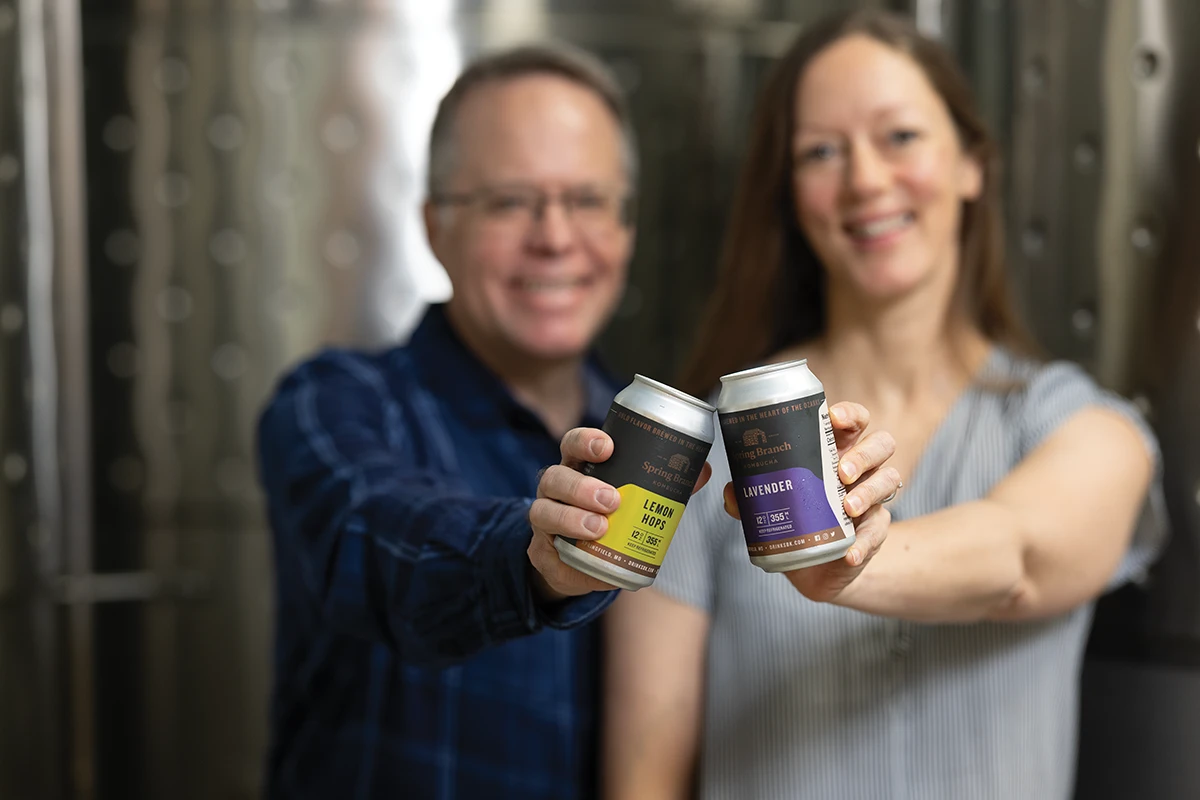
On the surface, kombucha looks simple. Tea, sugar and a little time. But for Springfield-based Spring Branch Kombucha, that simplicity hides a carefully managed process shaped by biology and a steady dose of entrepreneurial patience.
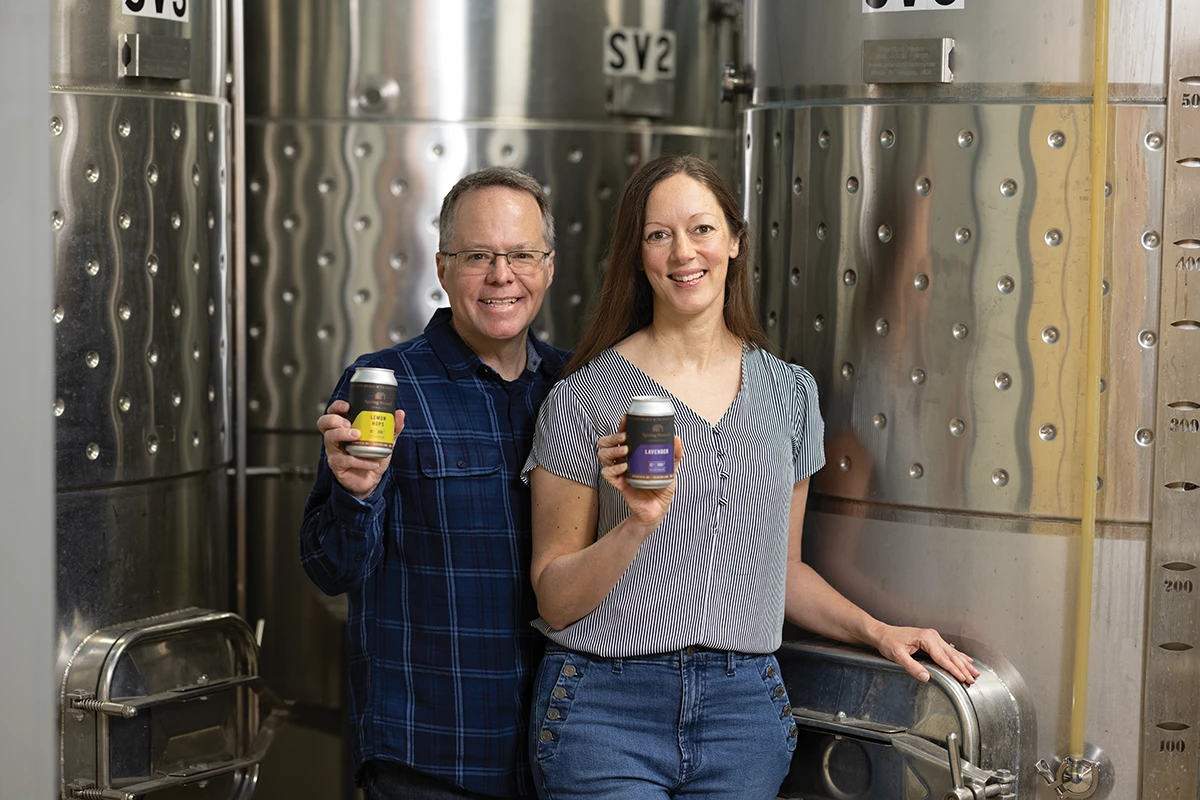
Founded by Chris and Jessica Ollis, Spring Branch began as a passion project that outgrew its original container. Chris, who was brewing beer at home, had become a fan of kombucha's health benefits. He was drinking so much that he started making kombucha in their basement as a cost-effective way to keep up with his habit. Jessica, whose background spans sales and customer service, was skeptical of his idea to scale things up.
"I thought it was just another hobby," Jessica says. "Then I tasted the batch of Lemon Hops and realized this could actually work."
A few encouraging taste tests with friends confirmed demand, but the leap from hobby to business came fast. To sell legally beyond farmers' markets, Spring Branch moved directly from basement brewing to a certified manufacturing facility. The result is a local beverage brand rooted in Ozarks culture, both in flavor and philosophy.
Step One: Brewing the Base
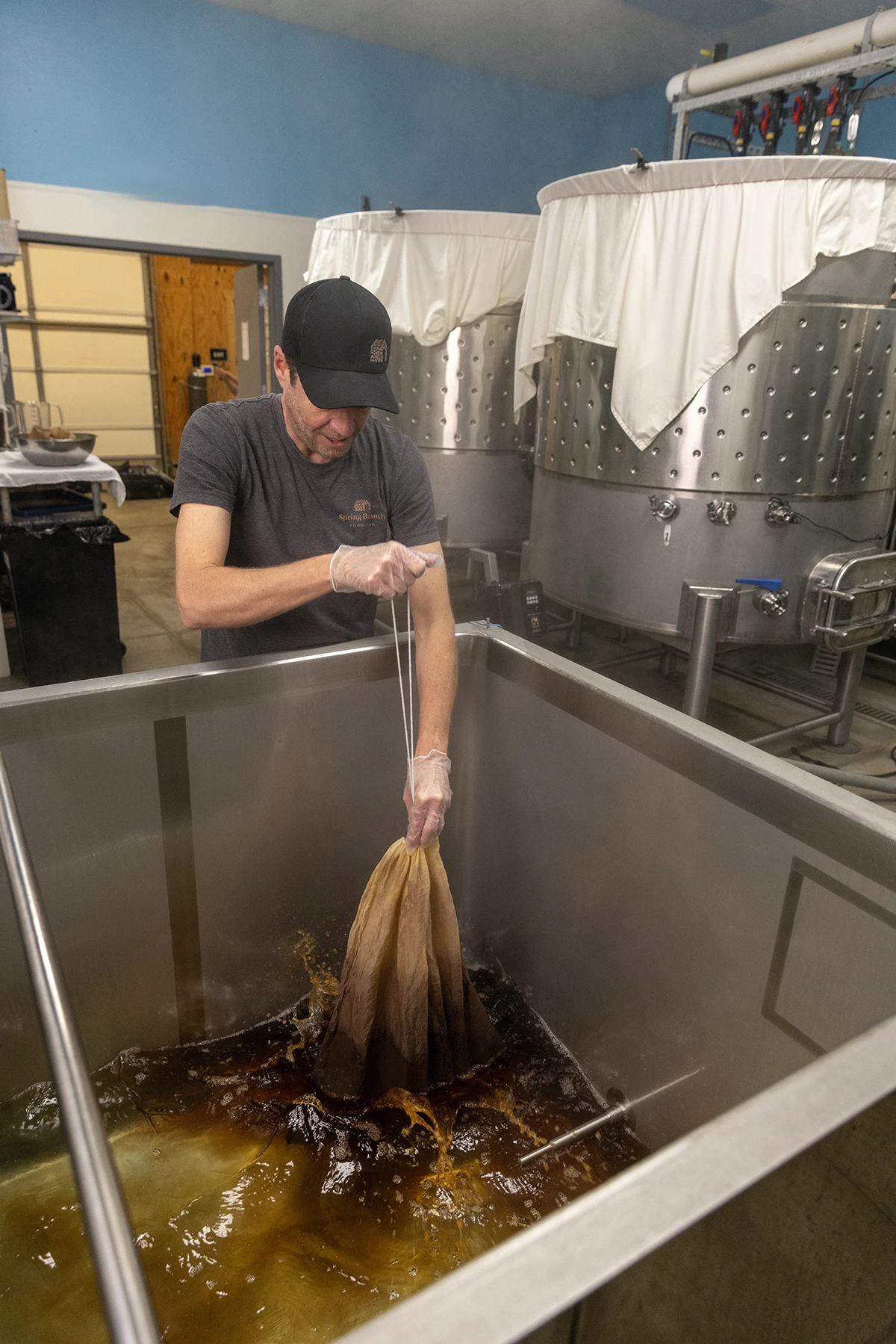
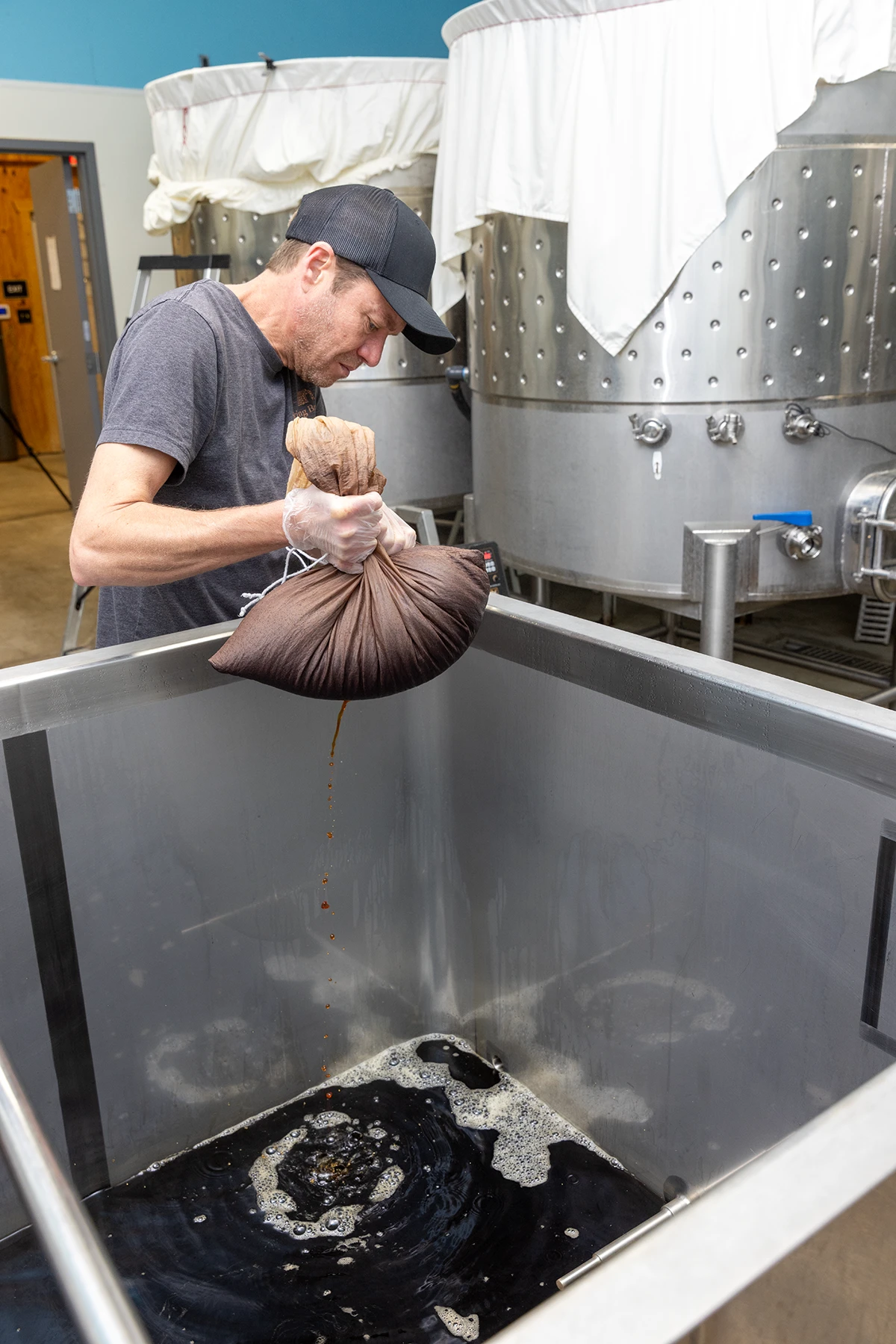
Every batch starts with filtered water, organic cane sugar and organic black tea. While any type of tea, including green or white, can be used to make kombucha, Spring Branch chose black tea exclusively. This decision came after testing how different teas reacted with their culture and local environment.
"The tea is the foundation," Chris says. "Everything builds from how it responds during fermentation."
The tea is brewed, sweetened and cooled before the fermentation culture is introduced.
Step Two: Fermentation Physics
Kombucha is a living beverage, and fermentation is what earns it that title. Once the culture is added, the liquid begins transforming over roughly 30 days. Its benefits begin to brew during this stage and will result in probiotics that support a healthy gut.
As the culture consumes sugar, it produces beneficial acids, B vitamins and probiotics. This process also lowers the pH quickly, moving the batch into a food-safe range within the first few days. The living nature of kombucha requires awareness of temperature, timing and continual monitoring.
Fermentation happens in open-air tanks, where a thick layer called a pellicle forms on top. The pellicle is part of the SCOBY, or Symbiotic Culture of Bacteria and Yeast. The pellicle protects the kombucha while allowing oxygen exchange. "It looks gnarly," Chris says with a laugh. "But people are fascinated by it."
Step Three: Maintaining the Mother Culture
To keep flavors consistent, Spring Branch maintains a long-term "mother" culture. Portions are used to start new batches, while others are retired as the culture strengthens over time.
"The culture that comes from the mother is exceptionally strong," Chris explains. "And the older it gets, the stronger it gets."
Knowing which cultures to use and when to retire older ones is part art, part science, and a constant process of adjustment for the Ollises. The approach mirrors sourdough baking, and each batch contains a bit of the previous one.
Step Four: Flavor Development
After fermentation, flavor comes into play. Nearly all ingredients are organic, and inspiration can come from anywhere, including family recipes.
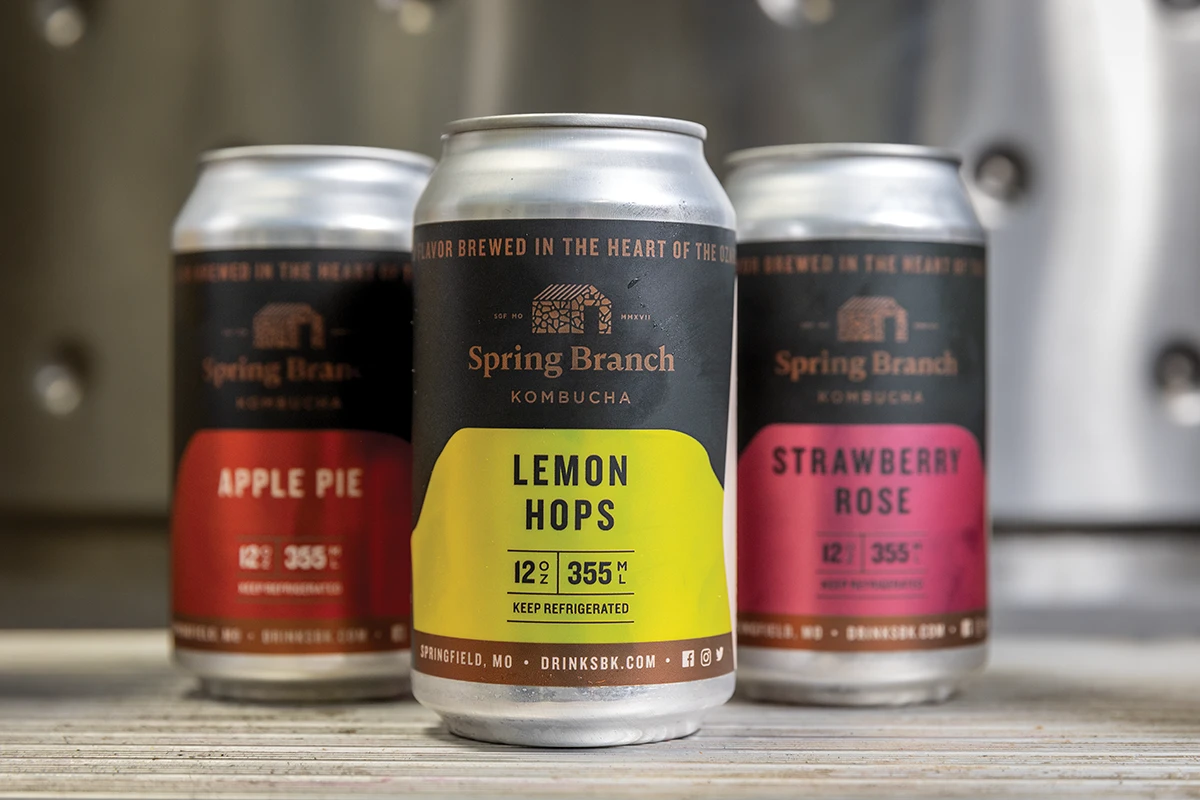
"For our Apple Pie flavor, we basically took an apple pie recipe that I had been using for years and converted it into kombucha," Jessica explains.
New flavors are often tested in small batches at farmers' markets before moving into broader distribution. Some landed immediately, like Strawberry Rose, Elderberry Ginger and of course, Lemon Hops. Others, like Coffee, have been a hit-or-miss with taste testers.
Step Five: Branding, Packaging and Distribution
For the Ollises, branding grew directly from the product itself. Chris sees kombucha as shaped by its environment, so they built Spring Branch's identity around the Ozarks. The logo features a spring house from the family farm, designed in a fieldstone style that echoes local architecture.
When it came to distribution, Spring Branch originally sold only kegs, but the pandemic forced a pivot. Canning and direct delivery opened new doors and ultimately stabilized the business. "That decision saved us," Jessica claims. "Without it, we wouldn't still be here."
Today, cans move from the production floor to local retailers, breweries and markets, carrying Ozarks-inspired branding that reflects the family's roots and the region's connection to nature.
Keeping a Strong Foundation
For Chris and Jessica Ollis, the process behind Spring Branch Kombucha reflects the realities of building a manufacturing company in the Ozarks. It takes patience, strong systems and the flexibility to adapt when circumstances shift. Each stage builds on the one before it, from nurturing a living culture to bringing a finished beverage in cans to market.
What started as a basement experiment is now a focused, regulated operation grounded in this region. "It's not just about making something people enjoy drinking," Jessica says. "It's about learning how to steward a product, a process and a business at the same time."