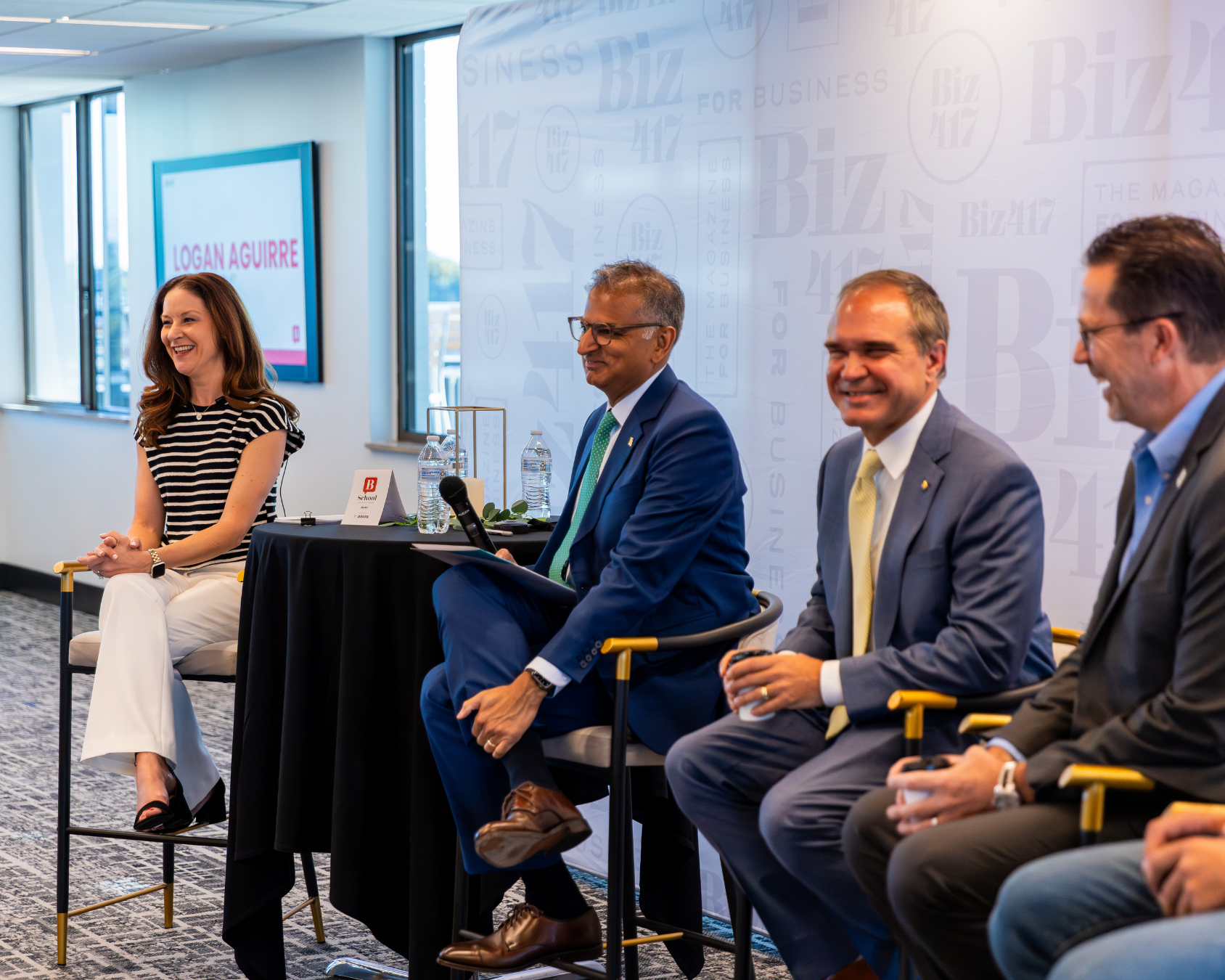
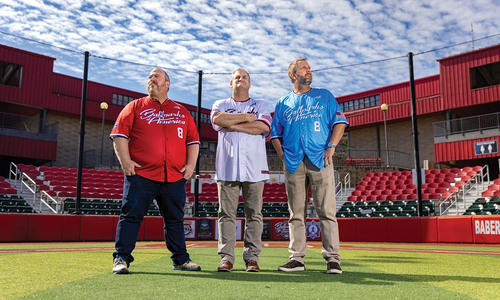
On June 23, 2026, the Biz 417 team gathered experts to have a conversation about one of the most talked-about topics in southwest Missouri right now: data centers. The conversation was in partnership with JMARK, and the panel led by Biz 417 Publisher Logan Aguirre included Subash Alias, CEO of Missouri Partnership; Jonas Arjas, senior vice president of economic development at Springfield Business Development Corporation; Dwayne Fulk, president and CEO at City Utilities Springfield; and Trent Overhue, commercial real estate developer and owner of Northern States Investments.
The conversation comes after recent pushback from the Webster County community over a new data center being built there—a project Overhue is spearheading. Overhue said the Marshfield, Missouri, data center project came together quickly after discussions with the local utility revealed a significant amount of unused power capacity at a nearby substation. He described the planned facility as small by data center standards, operating at 10 megawatts and serving a limited number of tenants.
Overhue said the project would help make use of existing infrastructure while generating additional revenue for the local utility. He also addressed concerns raised by residents, particularly around water use and environmental impacts. The facility will use a closed-loop cooling system that recirculates water, requiring only occasional replenishment.
Misconceptions About Data Centers
The B-School panelists addressed what they consider misconceptions about data centers.
Water usage: The most common misconception about data centers currently is that they're going to steal all the water from the local community. "The biggest misconception is that you're using millions of gallons of water, and you're going to drain aquifers," Overhue said. "Most of them are not that way. I wouldn't say all of them are designed appropriately, but for our uses, we did take a lot of measures to be as environmentally friendly as we possibly can."
Toxins: Another misconception Overhue hears is that data centers will create toxins that will get into the water system. "That is not true," he claims.
NDAs: Fulk said that one common misconception is that data center projects are intentionally secretive because of nondisclosure agreements, but that those agreements are a standard part of competitive economic development rather than an attempt to hide activity.
Economic Opportunity
Alias said data centers represent one of the fastest-growing areas of economic development and a major opportunity for Missouri. He explained that companies such as Google, Meta and Amazon Web Services are actively seeking locations with available land, power infrastructure and supportive communities.
According to Alias, data centers bring significant capital investment and can create long-term economic benefits for communities. He said Missouri has become an attractive destination because of its available sites and infrastructure, but emphasized that public perception matters. "We cannot afford to have a 'do not enter' sign on our state," he said.
Communities that are open to learning about these projects and prepared to accommodate growth are more likely to compete successfully for future investment.
As It Pertains to City Utilities
"What we've seen, the typical data center might not use any more water than other types of businesses, such as a restaurant or a convenience store," Fulk said. He said the utility's main focus when evaluating data center proposals is "do no harm," meaning existing customers come first.
He explained that projects must meet regulatory, permitting and utility requirements before moving ahead, and that City Utilities uses a large-load task force to carefully review proposals and confirm there are enough resources available. The task force also works to make sure new developments cover the costs they create rather than shifting those expenses to current customers.
The Local Economic View
Data centers should be looked at like any other economic development project, Arjes said. He added that what works in each community usually comes down to whether there's enough infrastructure and utility capacity to support it. While southwest Missouri's rural areas may not be a fit for the massive multibillion-dollar facilities being announced elsewhere in the state, smaller projects can be a good match.
Arjes said the economic value of data centers extends beyond job creation, which is often lower than traditional manufacturing projects but tends to offer higher wages. He noted that the tax revenue generated by these facilities can have a significant impact on schools, libraries, fire districts and other local services. He also pointed out that southwest Missouri companies already benefit from the data center industry by manufacturing equipment and components used in facilities across the country, and that the buildouts also create steady work for local trades and construction crews.
National Security
Fulk said one aspect of the data center conversation that often gets overlooked is national security. He encouraged attendees to consider the importance of keeping data and cybersecurity infrastructure under domestic control, as well as the potential advantages of having data stored across multiple smaller facilities rather than concentrated in just a few large locations. "That's something to think about in terms of, do we want to have control of our own data?" Fulk said. "Do we want to have control of the cybersecurity of our own data and the use of that data when it comes to national security implications?"
While opinions on data centers may vary, panelists agreed that understanding the facts is an important first step. As more data center proposals pop up across Missouri, these conversations are likely to continue in communities throughout the region.